Riding the Šargan Eight: A Journey Through the Mountains
NATUREHISTORYSERBIATRAINS
2 min read
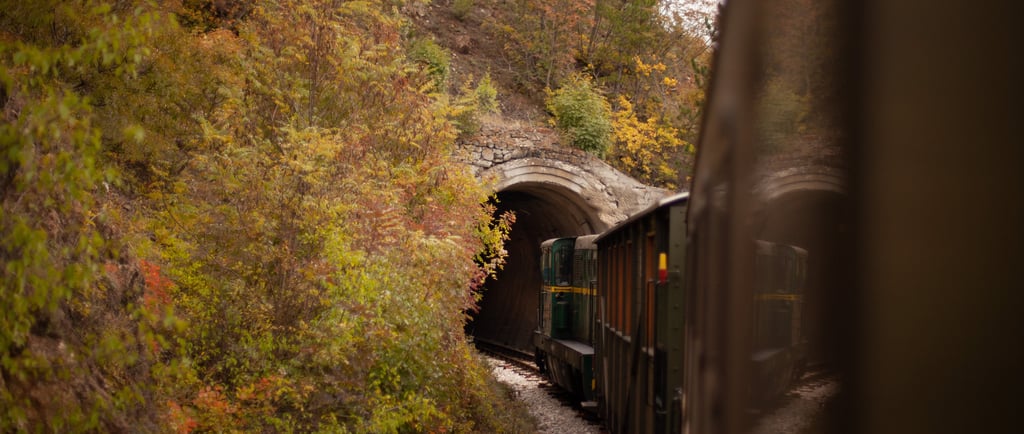
Riding the Šargan Eight: A Journey Through Mokra Gora’s Mountain Loops
In the far west of Serbia, pressed against the Bosnian border, lies Mokra Gora, a valley village framed by pine-covered slopes and slow, curling rivers. It’s a place of timber cottages, wooden chapels and mountain air—and the sound of a steam whistle sounding across the valley. That whistle belongs to the Šargan Eight railway, a narrow-gauge line whose looping tracks and vintage carriages have turned this rural corner into one of the country’s most enchanting journeys.
A Railway of Impossible Curves
The Šargan Eight was born out of necessity. In 1925, engineers faced the challenge of connecting the upland town of Užice with Višegrad, across the Tara and Zlatibor mountains. Standard tracks were impossible here, so they carved a marvel instead: a railway shaped like the number 8, twisting through tunnels and viaducts to conquer steep gradients without ever betraying the passengers to the strain of the climb.
The line carried freight, soldiers, and villagers until 1974, when modernisation shut it down. Then, in the early 2000s, the railway was lovingly restored—not as transport, but as theatre. Today, it is both a living museum and a working train, powered by vintage locomotives that puff through the mountains.
The Ride
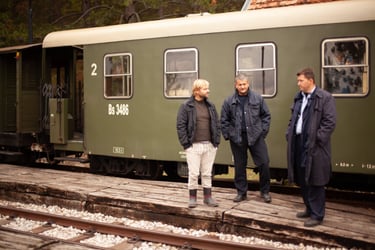
Board the train at Mokra Gora station. Inside, wooden benches creak, windows slide down and as the whistle blows, the train lurches forward onto its impossible track. Over 15 kilometres, the Šargan Eight climbs 300 metres in altitude, crossing 22 tunnels and five bridges, each bend revealing new vistas of forest, valley, or craggy slope.
The name “Eight” is literal: from above, the line’s route curls into a figure-eight, looping over itself so seamlessly that you hardly notice the climb. Passengers lean from the windows to catch the tunnels swallowing the light or the sudden sweep of the Drina Valley opening below.
A Living Piece of Culture
The railway is more than a tourist attraction; it’s a thread through Serbia’s cultural fabric. It once formed part of the legendary line that connected Belgrade with Sarajevo, Dubrovnik and the Adriatic coast. Today, its revival preserves not just engineering heritage but also memory: of mountain villagers who relied on its whistle, of soldiers who travelled its tunnels, of a Yugoslav project that once stitched disparate regions together.
Nearby, filmmaker Emir Kusturica built the wooden village of Drvengrad (Mećavnik) on the ridge above Mokra Gora—a cultural complex of log houses, galleries and a cinema named after Stanley Kubrick. Many visitors pair a ride on the Šargan Eight with a stroll through this imaginative mountaintop hamlet.